
Structural hollowing
A depression at the lid–cheek junction can cast a shadow. Selected patients may benefit from filler after anatomical assessment.
Consultant Plastic Surgeon-led assessment of under-eye hollows, dark circles and the lid–cheek transition. Hyaluronic acid filler may be appropriate for selected patients, but not every under-eye concern is caused by volume loss.
Not everyone is a candidate for tear trough filler; we assess for skin laxity, herniated fat pads and vascular considerations first.
At Santi London, established in South Kensington in 2009, assessment considers the relationship between the lower eyelid, cheek, skin and underlying facial structure. Consultant Plastic Surgeon Dr Mobin Saeed brings a surgical perspective to facial assessment. Filler is not always the appropriate option.
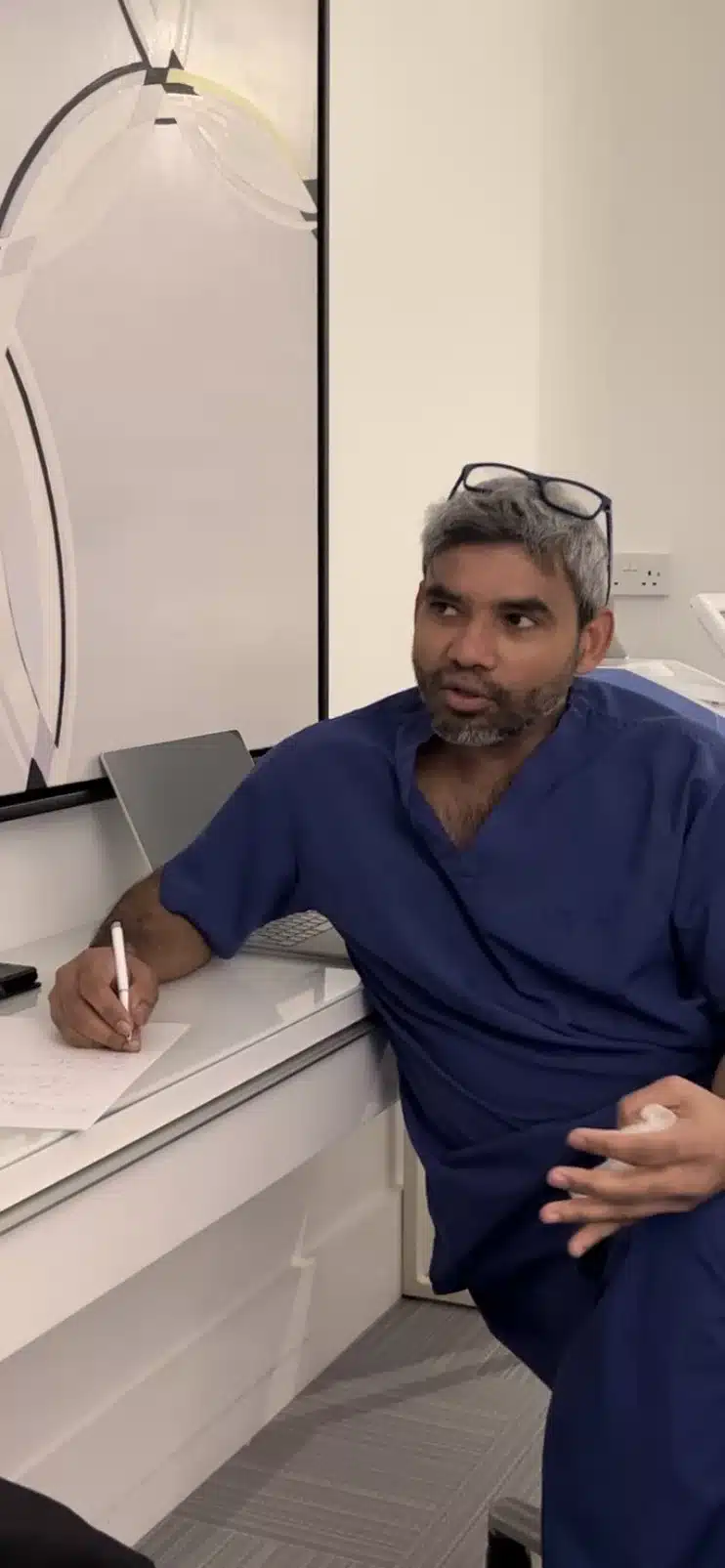
A depression at the lid–cheek junction can cast a shadow. Selected patients may benefit from filler after anatomical assessment.
Reduced cheek support can accentuate the transition beneath the eye. Cheek filler assessment may be more appropriate than direct tear trough treatment.
Darkness may reflect pigment, visible vessels or thin skin rather than hollowing. Skin-quality treatments may be considered after assessment; filler does not remove pigment.
Prominent fat pads, fluid retention and laxity may be worsened by filler. A surgical opinion or no treatment may be preferable.
Product choice and placement depend on anatomy, previous treatment and individual suitability. Conservative treatment aims to soften the lid–cheek transition without creating excess volume.
Risks include bruising, swelling, persistent puffiness, lumps, blue-grey discolouration, infection and asymmetry. Rare vascular occlusion can cause tissue damage or permanent visual loss. Reversal of HA filler is not guaranteed to reverse complications.
Early to moderate hollowing without significant skin laxity or prominent fat prolapse. Suitable in many skin tones; personalised plans for each client.
Marked laxity, pronounced eye-bag (fat herniation), very thin/crepey skin, or vascular risks may respond better to alternative treatments. We’ll guide you.
Severe or increasing pain, pale or mottled skin, or unusual colour changes after filler require immediate clinical assessment. Contact the treating clinic urgently. For any sudden visual disturbance, loss of vision or stroke-like symptoms, call 999 immediately and tell emergency staff about the filler procedure. Do not wait for a routine review.
Pricing is confirmed after assessment of suitability and the proposed treatment plan. See our price list or contact Santi for current information.
Elective filler is not offered during pregnancy or breastfeeding.
Around 6–12 months is an indicative guide, not a guarantee. Filler may remain in tissue longer than its visible effect. Further treatment should follow reassessment.
Filler may soften shadows caused by structural hollowing in selected patients. It does not directly treat pigmentation or visible vessels and can worsen puffiness in unsuitable patients.
Swelling, bruising and tenderness can occur and may persist beyond a few days. Persistent oedema, lumps and rare serious vascular or visual complications are possible.
Transparent pricing is provided at consultation once we confirm candidacy and the likely volume/plan. We avoid over-correction.
Medical disclaimer: Results vary. A consultation is required to determine suitability. If tear trough filler is not appropriate, we will discuss alternatives.
Santi London, 33 Thurloe Street, London SW7 2LQ. We will discuss whether filler, another approach or no treatment is appropriate.