
Desk professionals
Neck pain, back pain, headaches, stiffness and posture-related discomfort.
Precise assessment and structured rehabilitation for pain, injury and movement limitations — focused on understanding what is driving the problem, restoring function and building long-term resilience.
Physiotherapy is often most useful when pain or injury starts to change how you move, train, work or sleep. The aim is not simply to reduce symptoms for a few days, but to understand the problem and progressively restore capacity.
Neck pain, back pain, headaches, stiffness and posture-related discomfort.
Gym, running, tennis, padel and sports-related injuries or performance limitations.
Structured rehabilitation after orthopaedic, spinal or joint procedures.
Recurring flare-ups where the goal is to understand why symptoms keep returning.
Choose the area most relevant to you. Each guide explains what we assess, how rehabilitation progresses and when medical review may be more appropriate.
Lumbar pain, nerve-related leg symptoms and recurring back flare-ups.
Read the back pain guide →Mechanical neck pain, cervicogenic headaches, stiffness and desk-related symptoms.
Read the neck guide →Rotator cuff irritation, shoulder pain, weakness and restricted overhead movement.
Read the shoulder guide →Meniscal irritation, patellofemoral pain, strength deficits and return-to-running.
Read the knee guide →Adductor and hip-flexor strains, gluteal tendinopathy and selected labral irritation.
Read the hip guide →Ankle sprains, Achilles pain, calf capacity, balance and return-to-sport progression.
Read the ankle guide →Progressive loading for lateral or medial elbow tendinopathy, with work and sport modifications.
Read the elbow guide →Protocol-aligned rehabilitation after knee, hip, shoulder, spine, foot or hand surgery.
Explore post-op rehab →Neck, shoulder and back symptoms linked to prolonged sitting, laptop work and ergonomics.
Read the desk-pain guide →Breathlessness, airway clearance, recurrent chest infections and respiratory rehabilitation.
Explore respiratory physio →Assessment, load management and graded return for gym, running, racket sport and training injuries.
Ask us about your injury →A structured approach when symptoms repeatedly settle and return without a clear long-term plan.
Describe your symptoms →History, movement testing, strength and clinical reasoning to identify contributing factors rather than treating symptoms in isolation.
Manual therapy where appropriate, combined with practical movement or exercise guidance from the first appointment.
A personalised home programme with realistic milestones, refined as symptoms settle and capacity improves.
Help movement feel safer and reduce unnecessary guarding or avoidance.
Improve walking, lifting, training, desk comfort, sleep and daily activity.
Strength, confidence and self-management strategies designed to reduce recurrence.
Joint mobilisation, soft-tissue techniques, trigger-point work and stretching where useful.
Strength, mobility, motor-control and return-to-activity progressions.
Structured rehabilitation aligned with your procedure and surgeon guidance.
Desk set-up, pacing strategies and practical changes to reduce repeated aggravation.
Used selectively as short-term adjuncts rather than substitutes for rehabilitation.
Clear explanations so symptoms feel less mysterious and self-management becomes practical.
| Your main concern | Best starting point | Why |
|---|---|---|
| Pain, injury, weakness or restricted movement | Physiotherapy | Assessment-led care, diagnosis, rehabilitation and progressive loading. |
| General muscular tension, recovery or relaxation | Massage | Best where there is no specific injury or rehabilitation need. |
| Training soreness or recurring tightness without clear injury | Sports Massage | Targeted soft-tissue recovery without a full injury pathway. |
| Sudden severe, progressive or systemic symptoms | Medical review | Urgent or unexplained symptoms need medical assessment rather than routine physiotherapy. |
Most musculoskeletal pain can be assessed safely in physiotherapy, but some symptoms require urgent or medical assessment first.
HCPC-registered, MSc-qualified senior physiotherapists offering calm, structured and clinically grounded care.
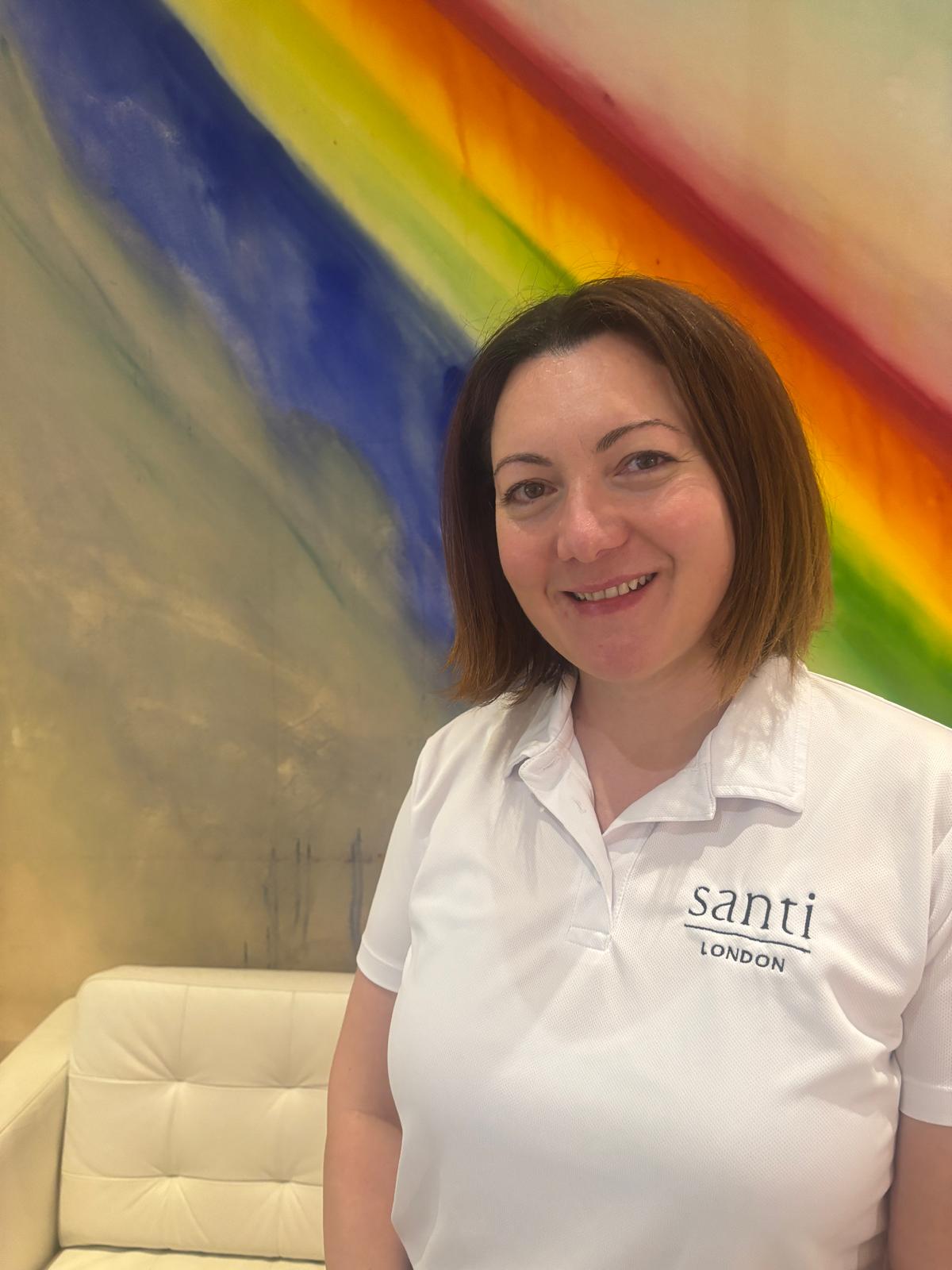
Elizabeth brings more than 20 years of experience in complex rehabilitation and injury management, with particular interest in spinal and upper-limb conditions. Her work combines detailed assessment, progressive rehabilitation and confidence-building guidance.
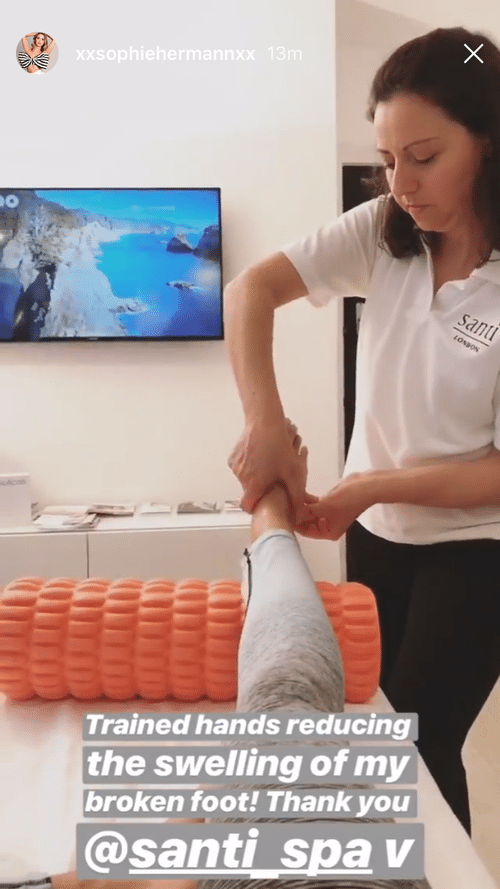
Maria combines respiratory expertise with musculoskeletal rehabilitation. Her sessions integrate functional movement, breathing strategies, pacing and practical home guidance, particularly after illness, surgery or persistent respiratory symptoms.
Explore respiratory physiotherapy →For general muscular tension, recovery and relaxation.
Explore massage →A longer head-to-toe treatment blending recovery-focused and restorative techniques.
Explore Full House →Targeted soft-tissue work for training recovery and muscular tightness.
Explore sports massage →Objective measurement and diagnostics within Santi’s wider clinical network.
Explore Skin Lab →Explore Santi’s wider rehabilitation, massage and wellbeing services.
Explore wellness →Specialist breathing, airway-clearance and respiratory rehabilitation.
Explore respiratory care →Read more about tension headaches and treatment pathways.
Read the article →An established Santi article on neck pain and physiotherapy.
Read the article →Meet Santi’s wider clinical and wellness team.
Meet the team →View current physiotherapy and wider Santi treatment pricing.
See prices →Not sure which appointment is right? Describe your symptoms and we’ll guide you.
Contact us →No. You can self-refer. If imaging or onward medical review is needed, your physiotherapist will guide you.
Comfortable clothing that allows movement and access to the affected area is ideal. Bring relevant scan reports or consultant letters if you have them.
It depends on the condition, duration of symptoms, goals and response. Your first session should give you a clearer idea of the likely pathway and review points.
Usually yes, where appropriate. Assessment remains the priority, but hands-on treatment and practical exercise guidance can begin on day one.
Usually not. Many musculoskeletal conditions can be assessed clinically. Imaging is considered where the history, examination, red flags or lack of progress make it appropriate.
Physiotherapy is generally the better starting point for pain, injury, weakness, restricted movement or recurring symptoms. Massage is more appropriate for general tension, relaxation or muscular recovery.
Often. The aim is to understand contributing factors, improve movement and load tolerance, and build a plan that reduces repeated flare-ups rather than relying on passive treatment alone.
Yes. Assessment and rehabilitation are adapted to baseline strength, balance, medical history, confidence and individual goals.
Start with a private 60-minute consultation. We’ll assess the problem, begin treatment where appropriate, and give you a clear plan from day one.
Information on this page is for general guidance and does not replace medical advice. If you feel acutely unwell or symptoms are severe, seek urgent medical care.